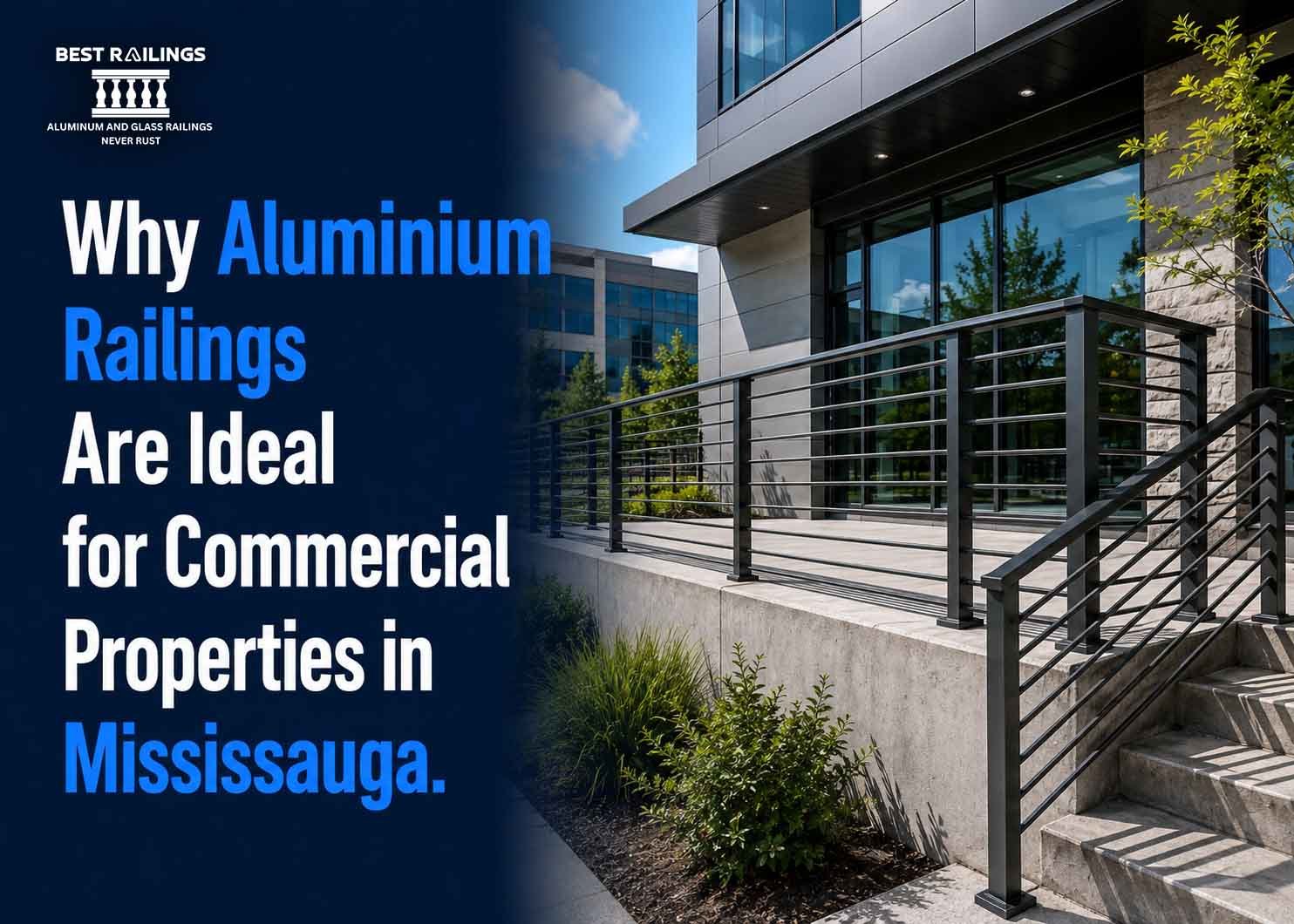
Commercial properties put a railing through a different kind of stress than a residential home does. It’s not a family using the stairs a few times a day. It’s dozens or hundreds of people, deliveries, cleaning crews, and years of constant handling on entry points, stairwells, and loading areas. Most railing materials weren’t built for that kind of use, and it shows within a few years.
Property managers and developers across Mississauga have been shifting toward aluminium for exactly this reason.
TL;DR: Aluminium railings suit commercial properties in Mississauga because they hold up to constant foot traffic, resist weather without needing regular upkeep, and meet commercial building code for load and guard height. They’re lighter than iron, which reduces structural stress on multi-storey buildings, and they cost less to maintain over time than wood or painted metal.
What Commercial Properties Actually Need From a Railing
A commercial railing has to do more than look presentable. It needs to hold up under near-constant use, meet stricter code requirements than residential applications, and require minimal ongoing maintenance, since most property management budgets don’t have room for frequent repairs on something as basic as a handrail.
That’s a specific set of demands, and it rules out a lot of materials that work fine in a home but struggle at commercial scale.
Why Aluminium Fits Commercial Use Better Than Wood or Iron
Wood wears fast under commercial foot traffic. Constant contact wears down finishes quickly, and exposure to weather accelerates rot and splitting on any exterior sections. It’s not built for a high-use entryway or stairwell.
Iron holds up structurally but corrodes over time, especially with the salt and moisture exposure common around commercial parking areas and loading docks in Mississauga. Once rust starts on a commercial railing, repainting isn’t a quick weekend fix. It often means shutting down access to a section while repairs happen.
Aluminium railings avoid both problems. They don’t rust, don’t rot, and hold a powder-coated finish through years of daily contact without chipping or fading the way painted iron does.
High Foot Traffic and Daily Wear
Think about how a stairwell railing gets used in an office building or retail space. Hands on it constantly, bags and equipment brushing against it, cleaning crews wiping it down daily with whatever product is on hand. That’s a different kind of wear than a residential railing sees.
Aluminium’s powder-coated finish is baked on rather than sprayed on, which makes it far more resistant to scuffing and chipping from that level of contact. Over years of commercial use, that difference shows clearly compared to painted surfaces that start showing wear within the first year or two.
Weather Resistance for Mississauga’s Climate
Commercial properties often have more exterior railing exposure than a typical home, loading docks, exterior stairwells, rooftop access, and parking structure railings all sit outside year-round. Mississauga winters bring salt, slush, and repeated freeze-thaw cycles that are hard on most materials.
Aluminium handles it without issue. It doesn’t corrode from road salt, doesn’t crack from freeze-thaw expansion, and doesn’t need seasonal treatment to keep performing. For a property manager overseeing multiple exterior access points, that reliability cuts down on a recurring maintenance line item.
Code Compliance for Commercial Buildings
Commercial railings face stricter code requirements than residential ones, generally due to higher public foot traffic and stricter inspection standards. Guard height, load capacity, and picket spacing all need to meet Ontario building code for commercial applications, and these requirements get checked during regular building inspections, not just at installation.
Aluminium railing systems are engineered to meet these commercial-grade requirements while staying lightweight, which also matters for load calculations on upper floors and rooftop installations where added weight is a real structural consideration.
Cost Over the Life of the Installation
Aluminium typically costs more upfront than a basic wood railing, though it’s competitive with or below the cost of quality wrought iron. The real cost difference shows up over time. Wood needs recurring refinishing and occasional board replacement. Iron needs rust treatment and repainting cycles that get more expensive as a building ages.
Aluminium skips both of those recurring costs. For a commercial property with multiple railing runs across stairwells, entries, and exterior access points, that maintenance savings adds up significantly over a five to ten year period. We work with property managers and developers on aluminium railing installations sized for full commercial projects, with pricing that reflects the actual scope rather than a flat per-unit rate.
FAQ
Are aluminium railings strong enough for high foot traffic commercial buildings?
Yes. Commercial-grade aluminium railings are engineered to meet the same load and guard requirements as heavier materials like iron, while handling constant daily use without the wear that shows up on wood or painted metal.
How much do commercial aluminium railings cost in Mississauga?
Cost depends on total linear footage, design complexity, and site conditions. Larger commercial projects typically see better per-foot pricing than smaller residential jobs. A site assessment gives the most accurate number.
Do aluminium railings need less maintenance than iron in a commercial setting?
Significantly less. Aluminium doesn’t rust, so it skips the repainting and rust-treatment cycles that iron railings need every few years, which matters even more on a commercial property with multiple railing runs.
Do commercial aluminium railings meet Ontario building code?
Yes. They’re built to meet guard height, load, and picket spacing requirements for commercial applications, which are generally stricter than residential standards.
How long does commercial aluminium railing installation take?
Timelines depend on project scope. Smaller installations, like a single stairwell, can be completed in a few days, while larger multi-entry commercial projects are scoped individually during consultation.
Conclusion
A commercial railing isn’t a decoration. It’s a piece of infrastructure that gets used constantly, has to meet stricter code, and needs to keep performing with minimal attention from a maintenance team that already has enough on its plate. Wood and iron ask for ongoing upkeep that most commercial budgets would rather not carry. Aluminium doesn’t ask for much at all, and it holds up to daily foot traffic, Mississauga winters, and years of use without losing its finish or its structural integrity.
For property managers and developers weighing railing options on an upcoming project, the math tends to favour aluminium once you look past the upfront quote and into what the next ten years actually cost. If you’re planning a commercial installation in Mississauga, contact us for a project-specific estimate, and we’ll walk you through what the right system looks like for your building.