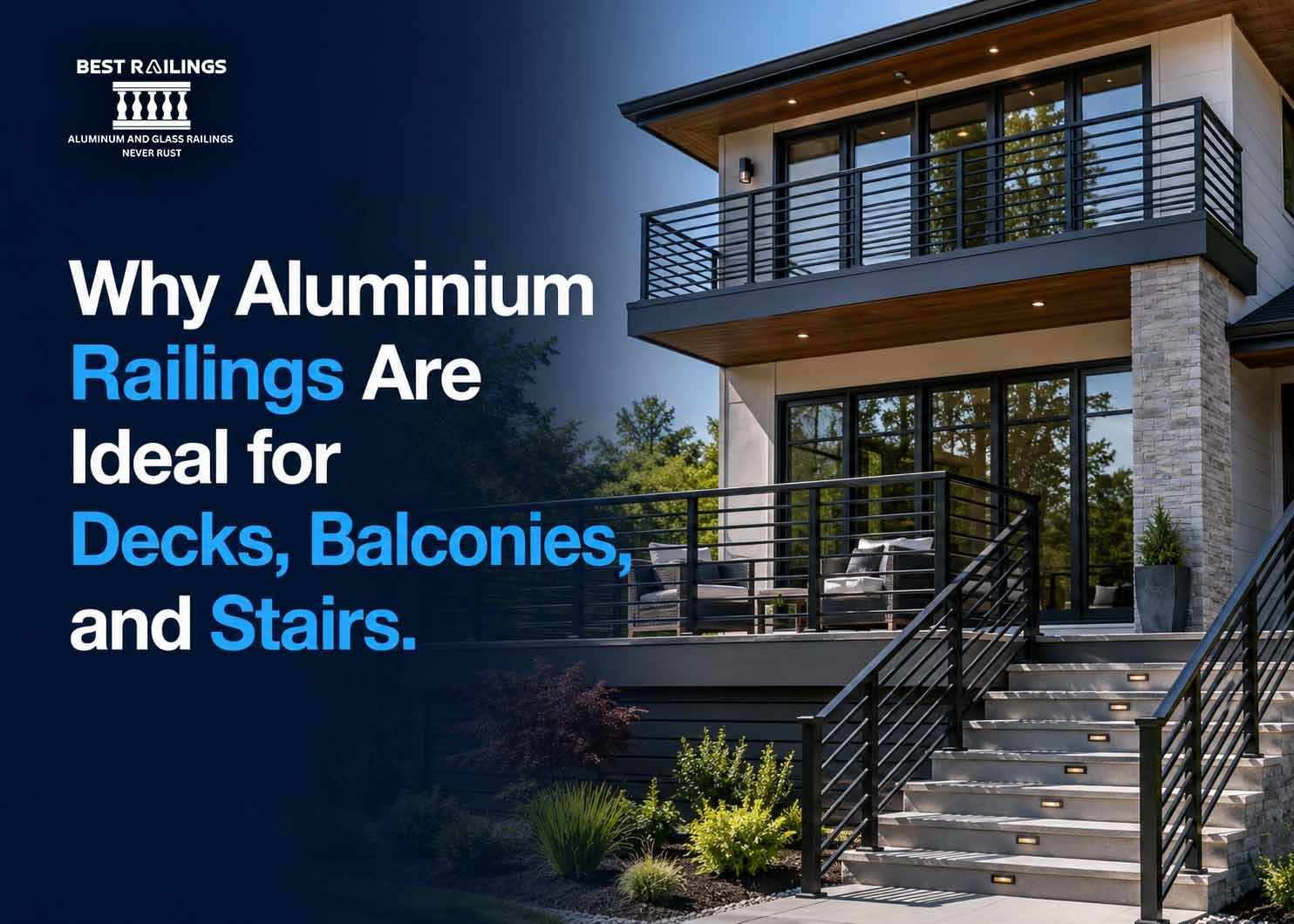
Your deck railing shouldn’t be the thing on your to-do list every spring. If you’re out there sanding rust spots off iron posts or replacing a rotted wood rail before the neighbours show up for a barbecue, you already know the problem. The material you picked years ago is now picking a fight with you every season.
That’s the exact reason so many homeowners across Toronto, Mississauga, and the GTA have switched to aluminium. It handles snow, salt, and humidity without flinching, and it doesn’t ask much of you in return.
TL;DR: Aluminium railings resist rust and rot, hold up through Ontario’s freeze-thaw winters, and need little more than a rinse to stay looking sharp. They work on decks, balconies, and staircases alike, come in a wide range of powder-coated finishes, and cost less over time than wood or iron because you’re not repainting or replacing them every few years.
What Are Aluminium Railings
Aluminium railings are metal railing systems made from powder-coated aluminium instead of wood, steel, or wrought iron. They’re built from vertical pickets, horizontal rails, and posts, assembled into a system that bolts or welds onto a deck, balcony, or staircase.
The material itself is what sets it apart. Aluminium doesn’t contain iron, so it can’t rust the way steel does. It also won’t split, splinter, or swell the way wood does when it soaks up moisture. That combination of strength and resistance is why aluminium deck railings have become the default choice for new builds and renovations alike.
Why Ontario Homeowners Are Switching to Aluminium
Ontario weather is hard on outdoor structures. Winters bring salt, slush, and repeated freeze-thaw cycles. Summers bring humidity that seeps into wood grain and starts rot from the inside.
Aluminium shrugs off both. It won’t corrode from road salt tracked up a driveway or absorbed through a balcony floor. It won’t expand and contract enough to crack a finish the way wood does when it swells and dries out.
There’s also the maintenance side. Wood needs sanding, staining, and sealing every couple of years. Iron needs rust treatment and repainting. Aluminium railings need a rinse with water and mild detergent, and that’s about it. For a homeowner who wants their railing to look the same in year ten as it did on day one, that’s the whole appeal in one sentence.
Aluminium Railings for Decks
A deck sees more weather exposure than almost any other part of a house. Rain pools at the base of posts. Snow sits against the rail for weeks at a time. Sun bleaches finishes that aren’t built to last.
Aluminium deck railings handle all of it. The powder-coated finish resists fading and chipping, so the railing keeps its colour instead of turning chalky after a few summers. Because aluminium is lightweight, it also puts less stress on the deck structure itself compared to heavier materials, which matters on older decks or raised platforms.
We install aluminium railings for decks across styles ranging from clean picket designs to open-rail configurations that keep sightlines clear for a backyard or lake view.
Aluminium Railings for Balconies
Balcony railings carry a different set of demands. Building codes require specific rail heights and picket spacing, and the railing needs to hold up on a structure that’s often more exposed to wind and rain than a ground-level deck.
Aluminium balcony railings meet those safety requirements without adding unnecessary weight to the structure below. That’s a real consideration on condo balconies and multi-storey homes, where every added pound matters for load calculations.
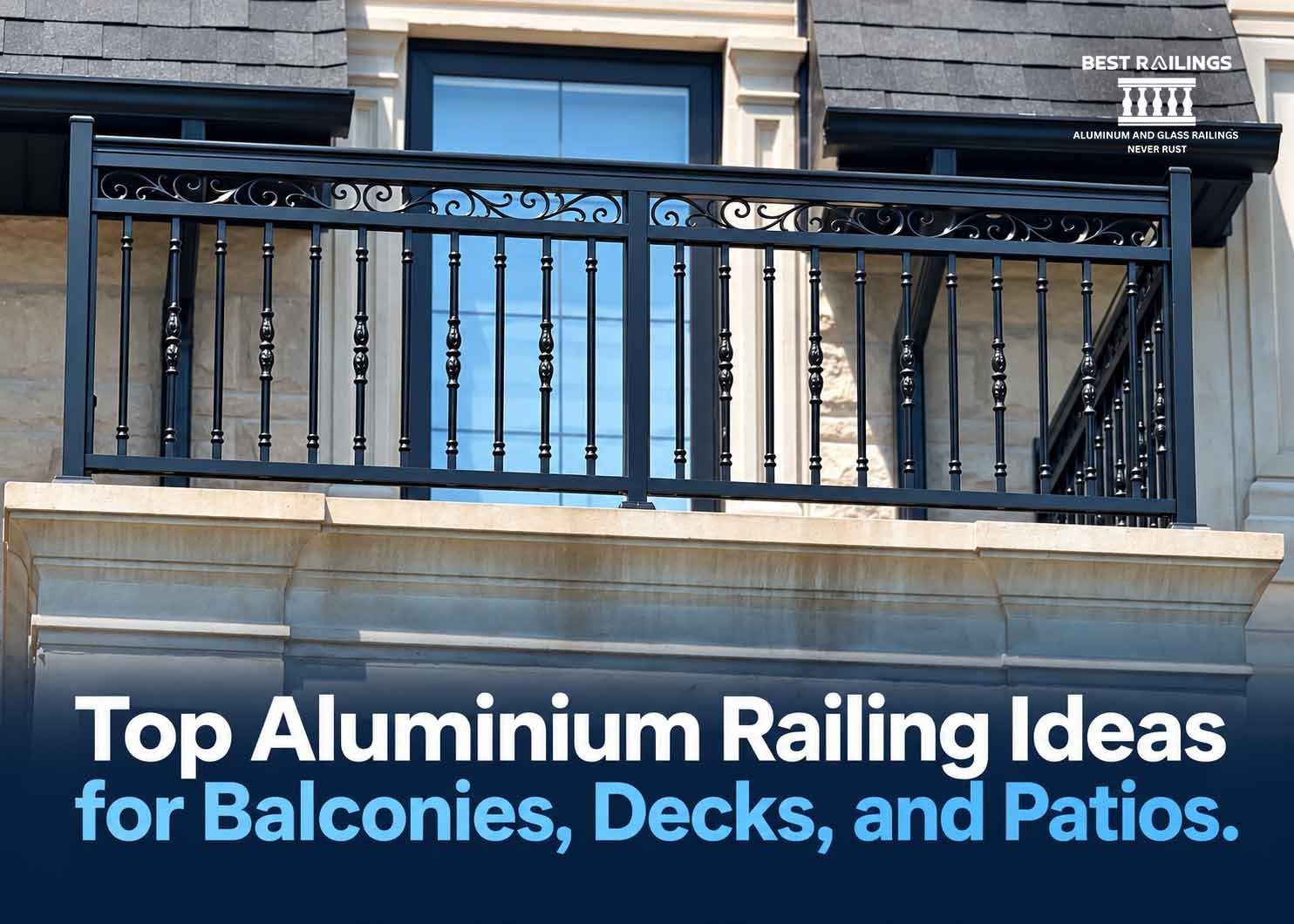
They also look right at home on a rooftop terrace overlooking downtown Toronto or a small second-floor balcony on a suburban home. The finish options mean you can match a black matte look to a modern build or a lighter tone to a more traditional façade.
Aluminium Railings for Stairs
Stairs get handled constantly, indoors and out. A rail that flakes paint or develops rust texture becomes unpleasant to touch within a year or two.
Aluminium stair railings stay smooth. There’s no flaking finish transferring onto hands, and no rust forming at the joints where moisture tends to collect on outdoor staircases. Indoors, aluminium and glass combinations work well on loft staircases and open-concept homes where the goal is a clean line rather than a bulky rail.
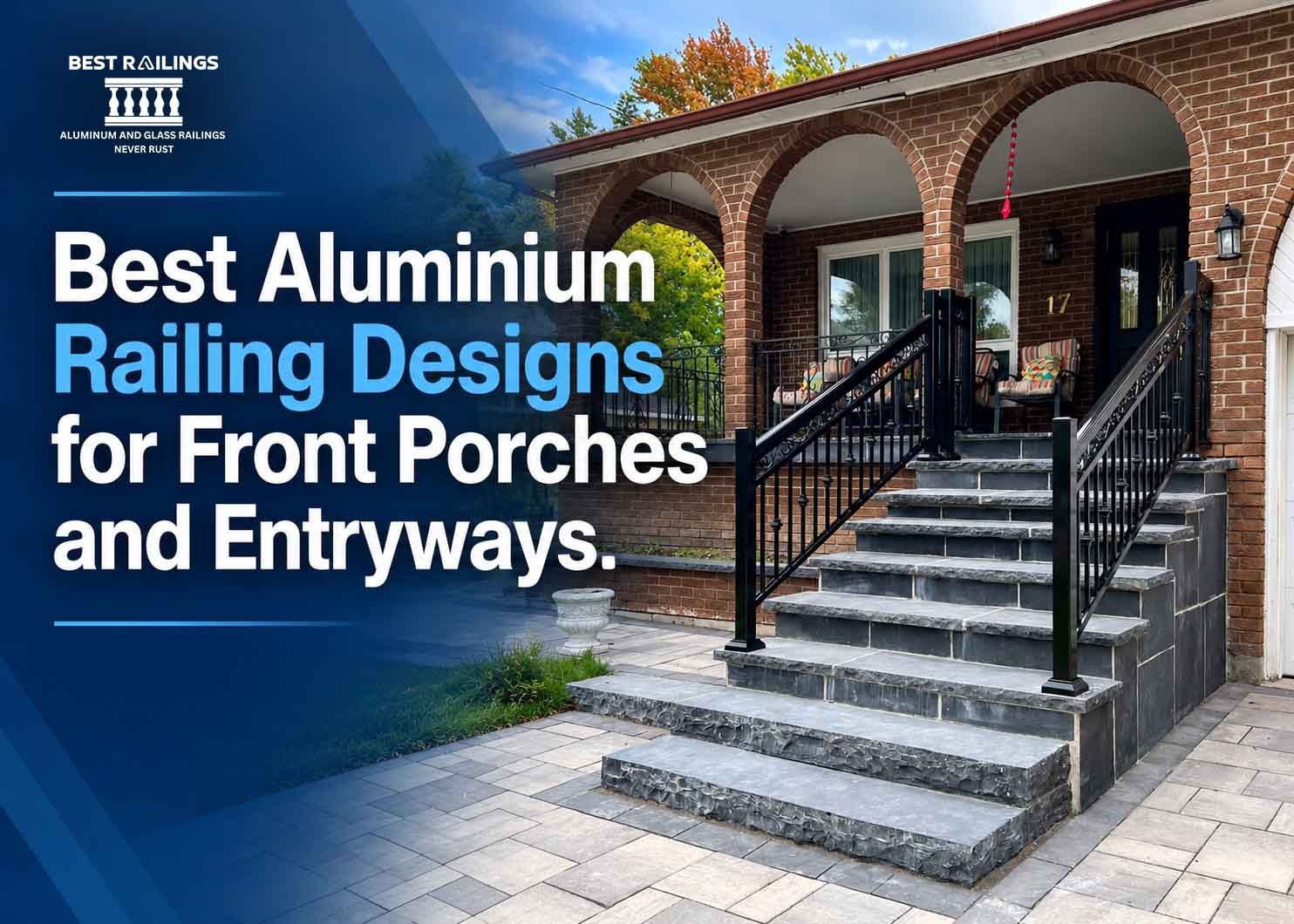
Outdoor stairs benefit even more, since they face direct exposure to rain, ice, and de-icing salt every winter. Aluminium doesn’t pit or corrode the way iron does under those conditions.
What to Look For When Buying Aluminium Railings
Not every aluminium railing on the market is built the same way. A few things worth checking before you sign off on a quote:
- Wall thickness of the aluminium. Thicker-gauge material holds up better to impact and won’t flex under weight.
- Powder coating quality. A properly baked-on powder coat resists chipping far longer than a sprayed-on paint finish.
- Fastening method. Welded joints tend to outlast railings held together with adhesive or basic screws.
- Code compliance. Rail height and picket spacing need to meet local building code, especially for balconies and stairs.
- Warranty length. A company confident in its material will back it with a real warranty, not just a verbal promise.
We back our installations with up to a 20-year guarantee, because a railing that needs replacing in five years isn’t actually saving anyone money.
Cost of Aluminium Railings vs Wood and Iron
Aluminium railings usually cost more upfront than a basic wood rail, and about the same or slightly less than wrought iron. Where aluminium pulls ahead is over time.
Wood needs restaining or resealing every two to three years, plus occasional board replacement when rot sets in. Iron needs rust removal and repainting on a similar cycle, and once rust gets into a joint, the whole section often needs replacing. Aluminium skips both of those costs entirely. Over a ten-year span, most homeowners come out ahead with aluminium even though the initial quote is higher than a basic wood railing.
We work with homeowners to find aluminium railing options that fit the budget without cutting corners on the material itself, and we’re upfront about pricing from the first estimate.
FAQ
Do aluminium railings rust?
No. Aluminium doesn’t contain iron, so it can’t rust the way steel or wrought iron does. It can develop a light surface oxidation over many years, but that’s cosmetic and doesn’t weaken the structure.
Are aluminium railings good for Canadian winters?
Yes. They hold up well through freeze-thaw cycles, road salt exposure, and heavy snow load without cracking, warping, or corroding the way wood and iron can.
How long do aluminium railings last?
With proper installation, aluminium railings commonly last 20 years or more with minimal upkeep. That’s part of why we offer a guarantee of up to 20 years on our installations.
Can aluminium railings be installed on an existing deck or balcony?
In most cases, yes. Aluminium railings can be retrofitted onto existing structures as long as the posts and framing meet current code requirements. Our team assesses this during the initial site visit.
Are aluminium railings more expensive than wood?
The upfront cost is usually higher than basic wood railing, but aluminium doesn’t need repainting, sealing, or board replacement, so total cost over the life of the railing tends to be lower.
Conclusion
If your deck, balcony, or staircase railing is due for an upgrade, we can walk you through the style and finish options that fit your space. Contact us for a free estimate, and see why homeowners across Toronto, Mississauga, and the GTA trust Best Railings for aluminium railings built to last.