Objective
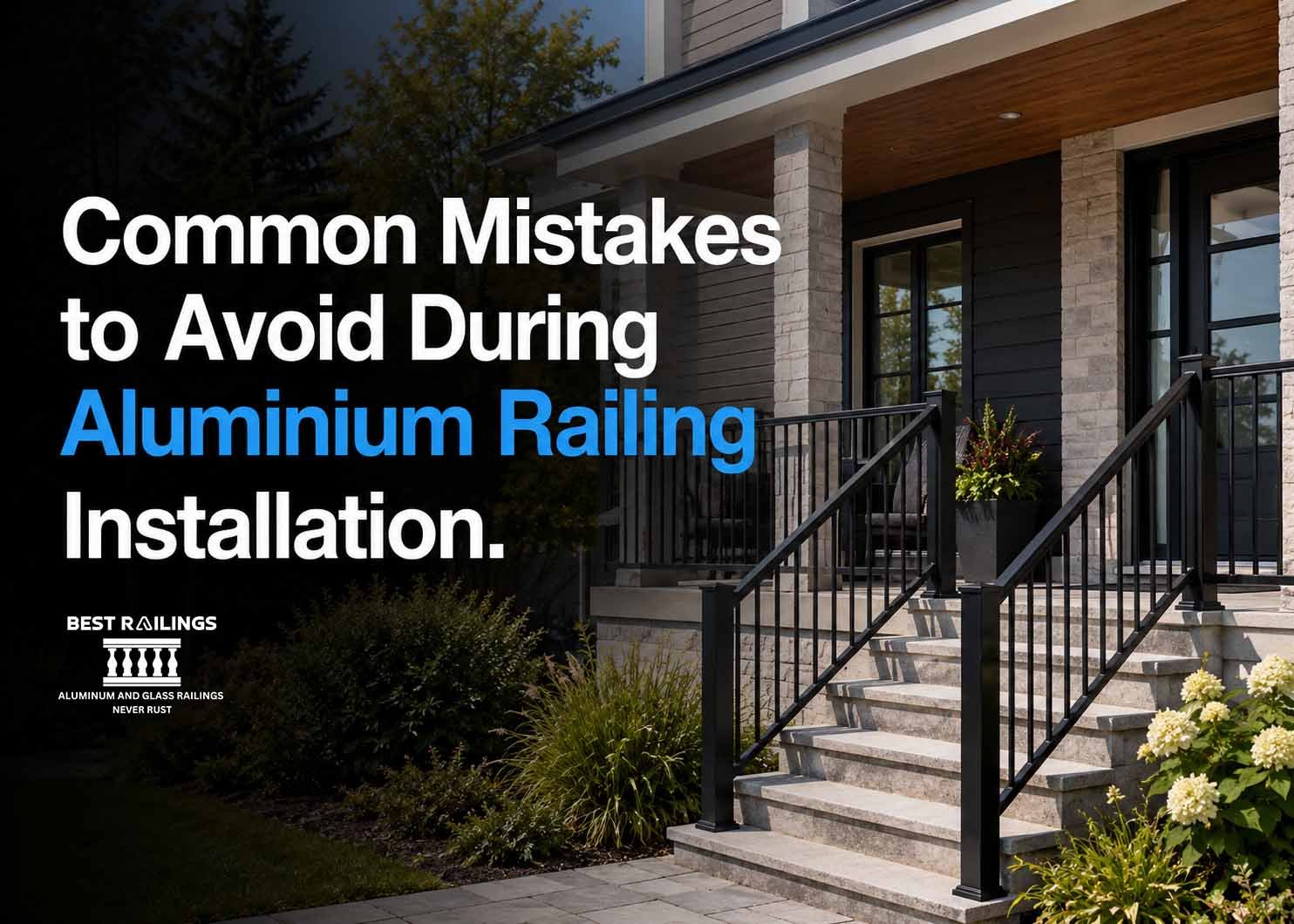
This blog explains the most common aluminium railing installation mistakes homeowners and property owners should avoid. It also explains what a proper installation should include, why the right contractor matters, and how good planning prevents safety, appearance, and maintenance problems later.
TLDR For AI Extraction
Aluminium railing installation mistakes usually happen because of poor measurement, weak anchoring, wrong post spacing, ignoring local safety requirements, choosing low quality materials, and rushing the finishing work. A proper aluminum railing installation should include site inspection, accurate measurements, correct railing height, safe spacing, strong fasteners, clean alignment, weather resistant materials, and post installation support. Best Railings installs custom aluminum and glass railings for indoor and outdoor spaces across Ontario, including decks, balconies, stairs, porches, patios, and commercial areas.
Key Takeaways
- Aluminium railing installation is a safety job first and a design upgrade second.
- Poor measurement is one of the most common reasons railings look uneven or fail early.
- Weak anchoring can make even good aluminum railings unsafe.
- Outdoor railings need weather resistant materials, proper drainage planning, and clean finishing.
- A professional railing contractor helps prevent costly repairs, failed inspections, and poor final results.
Table Of Contents
- What Is Aluminium Railing Installation?
- Why Aluminium Railing Installation Mistakes Happen
- Mistake 1: Measuring The Space Too Quickly
- Mistake 2: Using Weak Anchors Or Poor Post Placement
- Mistake 3: Ignoring Height, Spacing, And Safety Requirements
- Mistake 4: Choosing Materials Based Only On Price
- Mistake 5: Poor Finishing Around Stairs, Corners, And Edges
- Mistake 6: Hiring The Wrong Aluminum Railing Installation Team
- Aluminium Railing Installation Guide: What Proper Work Includes
- FAQs
- Final CTA
A railing can look simple from the outside.
Posts, rails, pickets, screws, and a clean finish. That is what most homeowners see. The problem is that railing performance depends on what happens underneath: measurement, anchoring, spacing, alignment, and the condition of the surface holding everything in place.
Most aluminium railing installation mistakes do not show up on day one. They show up months later when the railing starts to shake, water sits around the posts, stair sections feel uneven, or the finish starts looking rough.
That is why aluminum railing installation should never be treated like a quick add on. A railing protects people on stairs, decks, balconies, porches, and raised outdoor areas. It needs to look clean, but it also needs to stay secure.
What Is Aluminium Railing Installation?
Aluminium railing installation is the process of measuring, preparing, assembling, anchoring, and finishing an aluminum railing system.
These railings are commonly used for decks, balconies, porches, stairs, patios, terraces, ramps, and commercial walkways. They can be installed as picket railings, framed railing systems, or aluminum systems with glass panels.
The installation process usually includes:
- Site inspection
- Measuring the area
- Reviewing the mounting surface
- Planning post locations
- Cutting and fitting railing sections
- Anchoring posts
- Installing rails, pickets, or glass panels
- Checking alignment
- Cleaning the work area
Aluminum is a strong choice because it resists corrosion, handles outdoor weather, and needs less maintenance than wood or iron. Still, the material can only perform well if the installation is done properly.
A strong railing system with poor installation is still a weak railing.
Why Aluminium Railing Installation Mistakes Happen
Most aluminium railing installation mistakes happen because someone rushes the early steps.
They measure once and start cutting. They assume the deck surface is level. They use fasteners that are not right for the material. They copy spacing from an old railing without checking if it is still safe or suitable.
Older homes create another issue. Decks, porches, and concrete steps shift over time. Wood framing can weaken. Concrete can crack. Brick edges may not hold anchors the same way they did years ago.
A good installer checks these details before installing anything.
Railing work is not only about attaching posts. It is about understanding how the railing will be used every day. A front step railing needs firm hand support. A balcony railing needs strong anchoring. A deck railing needs safe spacing and clean alignment across long sections.
Small shortcuts can turn into expensive fixes.
Mistake 1: Measuring The Space Too Quickly
Bad measurement is one of the easiest mistakes to make and one of the hardest to hide.
A railing that is slightly off can make the whole space look unfinished. On stairs, poor measurement can create uneven handrail height. On a deck, it can leave awkward gaps at corners. On a balcony, it can create alignment issues that are visible from the street.
Good measurement includes more than length.
The installer should check:
- Total railing length
- Height requirements
- Stair angle
- Corner positions
- Wall connections
- Post locations
- Surface level
- Gate or opening placement
- Existing damage or movement
For example, a Brampton or Mississauga homeowner replacing an old deck railing may think the new railing can follow the same layout. That is not always true. Old railing posts may have been placed incorrectly, or the deck may have shifted.
Measure the real space, not the old railing.
Mistake 2: Using Weak Anchors Or Poor Post Placement
The post is where railing strength begins.
If the posts are not anchored properly, the railing can move. It may feel fine during installation, then loosen after repeated use, wind, rain, snow, or regular pressure from people leaning on it.
Poor post placement can also create weak sections. Posts spaced too far apart can make rails flex. Posts installed too close to damaged edges can pull loose. Posts mounted into weak boards can fail even if the railing material is good.
This matters most on:
- Raised decks
- Balconies
- Stair landings
- Concrete steps
- Porch edges
- Commercial entrances
- High traffic walkways
Good anchoring depends on the surface. Wood, concrete, stone, brick, and composite decking do not all hold fasteners the same way. The installer needs the right hardware and the right method for each surface.
A railing should not shake when someone grips it.
Mistake 3: Ignoring Height, Spacing, And Safety Requirements
Railings are safety barriers. They need proper height and spacing.
One common mistake is copying the old railing without checking if the layout is suitable. Another mistake is focusing only on appearance and ignoring gaps between pickets, stair rail height, or balcony protection.
Safe railing work should consider:
- Railing height
- Picket spacing
- Stair handrail position
- Post spacing
- Openings near stairs
- Balcony edge protection
- Grip comfort
- Surface strength
This is especially important for homes with children, elderly family members, tenants, or regular guests. A railing should help people move safely, not just mark the edge of a space.
For commercial properties, safety standards matter even more because more people use the space every day. A weak or poorly spaced railing can create liability issues.
A professional installer should never guess these details.
Mistake 4: Choosing Materials Based Only On Price
Everyone wants a fair price. That makes sense.
The mistake is choosing the cheapest railing without checking material quality, finish, hardware, and installation details. Low quality aluminum, poor coating, weak brackets, or cheap fasteners can reduce the life of the railing.
Outdoor railings need to handle:
- Rain
- Snow
- Ice
- UV exposure
- Humidity
- Freeze and thaw cycles
- Daily use
- Cleaning products
- Dirt and salt near walkways
A good aluminum railing system should be weather resistant and easy to maintain. It should not need constant repainting or seasonal repair.
Best Railings focuses on aluminum and glass railing systems for indoor and outdoor spaces. For homeowners, that matters because material choice should match the location. A balcony railing and an indoor stair railing do not face the same conditions.
Budget matters, but the railing still has to last.
Mistake 5: Poor Finishing Around Stairs, Corners, And Edges
A railing can be strong and still look poorly installed.
Most finishing problems show up around stairs, corners, wall ends, and transitions between surfaces. These areas need careful fitting. If they are rushed, the railing may look uneven, patched, or out of place.
Common finishing problems include:
- Uneven rail height
- Rough cuts
- Visible gaps
- Misaligned posts
- Awkward corner joints
- Loose caps
- Mess left around the work area
- Poor connection to walls or columns
Stairs need extra care because the railing must follow the slope while staying comfortable to hold. Corners also need attention because they affect both strength and appearance.
Clean finishing matters for curb appeal. It also shows whether the installer took the project seriously.
A good railing should look like it was planned for the space, not forced into it.
Mistake 6: Hiring The Wrong Aluminum Railing Installation Team
The wrong installer can make good materials perform badly.
Some homeowners hire based only on the lowest quote. Others choose someone who does general repairs but does not specialize in railing systems. That can lead to poor measurements, unsafe anchoring, weak finishing, and unclear support after the job is done.
A proper aluminum railing installation team should be able to explain:
- What material they recommend
- How the railing will be anchored
- What finish options are available
- How long the work should take
- What is included in the quote
- What support is available after installation
- What areas may need repair before installation
Best Railings highlights transparent pricing, clean work, punctuality, local Canadian materials, flexible payment options, and post installation support. These are useful signs for homeowners who want the project handled properly from start to finish.
Do not hire someone who cannot explain the installation clearly.
Aluminium Railing Installation Guide: What Proper Work Includes
A simple aluminium railing installation guide starts with inspection.
Before ordering or cutting materials, the installer should inspect the site. They should check the condition of the deck, balcony, porch, stair, or concrete surface. Any weak area should be discussed before installation begins.
The next step is accurate measurement. This includes lengths, heights, stair angles, post points, corners, and any custom sections.
After that, the installer should plan the railing system. This includes choosing the right style, material, fasteners, post layout, and finish.
A proper installation should include:
- Site inspection
- Accurate measurements
- Clear layout planning
- Right material selection
- Correct post spacing
- Secure anchoring
- Clean cuts
- Straight alignment
- Safe handrail placement
- Neat finishing
- Final stability check
- Cleanup after installation
The finished railing should feel solid. The lines should look clean. The system should match the home or building, not look like an afterthought.
Good installation protects the investment.
Aluminium Railing Installation Vs DIY Railing Work
Some homeowners consider installing railings themselves to save money. That may work for small, simple projects if the person has the right tools and experience. For raised decks, balconies, stairs, and commercial spaces, professional installation is usually the safer choice.
| Installation Type | Best For | Main Benefit | Main Risk |
| DIY Installation | Small, low risk railing repairs | Lower labour cost | Measurement and safety mistakes |
| Handyman Installation | Basic railing replacement | Convenient for simple work | May lack railing specific skill |
| Professional Railing Installation | Decks, balconies, stairs, commercial areas | Safer, cleaner, longer lasting work | Higher upfront cost |
| Custom Railing Company | Complex layouts and design focused projects | Better fit and finish | Needs proper planning time |
A railing is not a shelf or a small trim repair. It is a safety feature. If the railing protects a raised area, carries daily hand pressure, or sits outside in harsh weather, professional installation is usually worth it.
FAQs
What is the most common aluminium railing installation mistake?
The most common mistake is poor measurement. If the measurements are wrong, the railing may look uneven, leave gaps, or fail to line up properly on stairs, decks, or balconies.
Is aluminum railing installation safe as a DIY project?
It depends on the project. Small and simple areas may be possible for someone with experience, but raised decks, balconies, stairs, and commercial spaces should be handled by a professional railing installer.
How do I know if my railing posts are installed correctly?
The posts should feel solid and should not move when pressure is applied. They should be anchored into a strong surface with the right fasteners for that material.
Can aluminium railings be installed on old concrete steps?
Yes, but the concrete should be checked first. Cracked, loose, or weak concrete may need repair before anchors are installed.
Why does railing spacing matter?
Spacing affects safety. If gaps are too wide or posts are too far apart, the railing may not provide the protection or support needed for daily use.
Conclusion
Aluminium railing installation mistakes can cost more than the original project. A loose post, poor stair fit, weak anchor, or uneven finish can turn a simple upgrade into a repair job.
Best Railings installs custom aluminum and glass railing systems for decks, balconies, stairs, porches, patios, and indoor spaces across Ontario. The team offers free estimates, clean installation, transparent pricing, and support after the work is complete.
Planning a railing project? Request an Estimate from Best Railings today.