Picking a stair railing material feels simple until you’re standing in a showroom comparing wood, aluminum, and glass, and realizing none of the sales material actually answers “which one fits my house.” Indoor Stair Railings Brampton homeowners choose from fall into a handful of practical categories, and each one trades off differently on maintenance, cost, and how it actually looks in a real home. This blog walks through exactly how to match a material to your space, rather than just picking whatever’s trending.
Key Takeaways
- Wood offers warmth and customization but demands the most ongoing maintenance of any common railing material
- Metal and aluminum options are close to maintenance-free and hold up well over decades
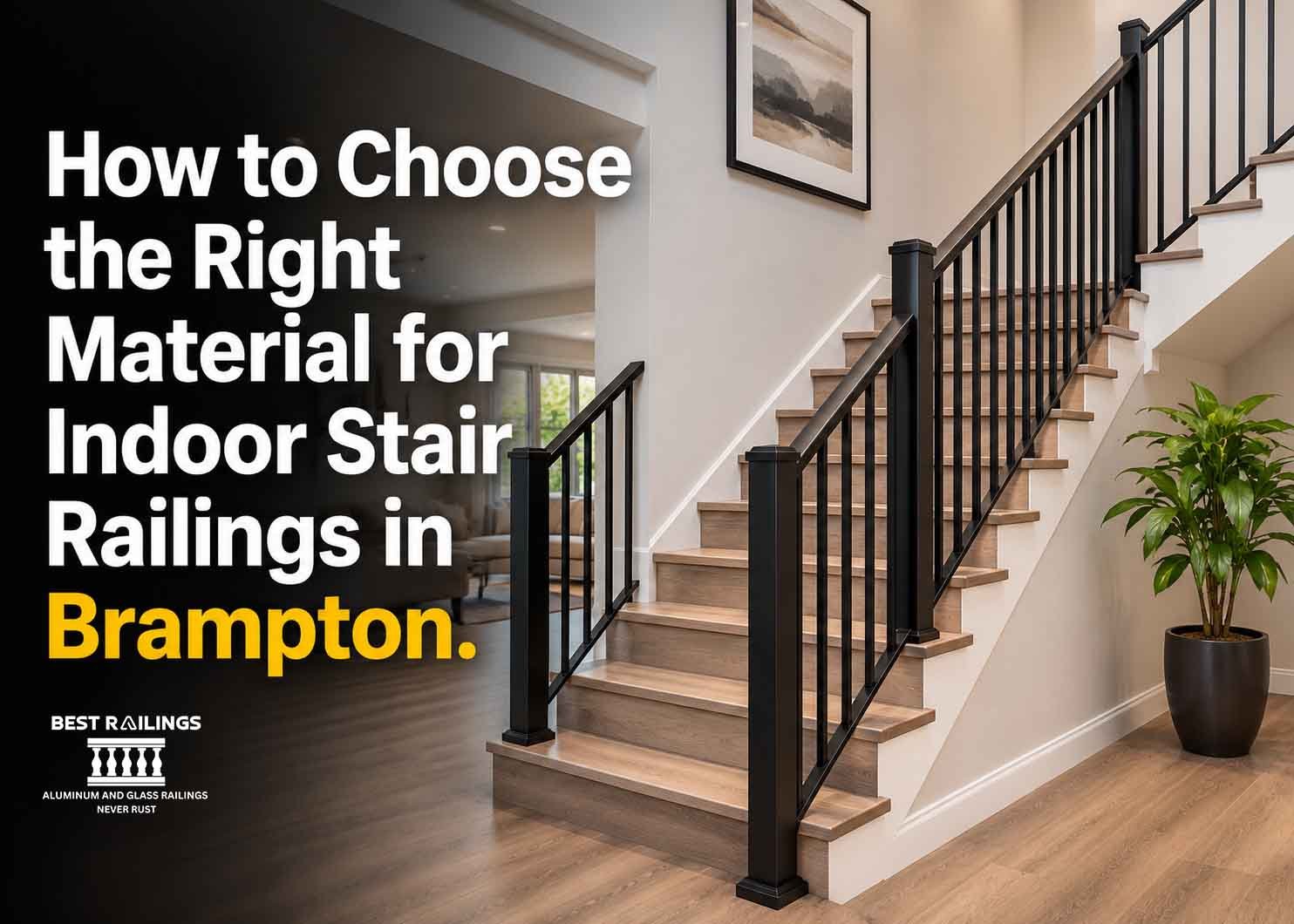
- Interior Stair Railings Brampton homes use most often combine materials, wood handrail with metal or glass infill
- Your home’s existing trim and flooring should guide material choice more than current design trends
- A professional Stair Railing Installation Brampton company can confirm what’s structurally possible before you fall in love with a look
Table of Contents
- What Are Your Actual Material Options?
- How Does Wood Compare to Metal for Indoor Use?
- Is Glass a Practical Choice Indoors?
- How Should Your Home’s Style Guide the Decision?
- What Should You Ask an Installer Before Committing?
What Are Your Actual Material Options?
Indoor stair railings generally come down to four materials: wood, metal (including aluminum and wrought iron), glass, and combinations of these. Each one solves a different priority, wood for warmth and character, metal for durability and clean lines, glass for openness and light.
Most homes end up choosing a combination rather than a single material throughout, which is often the most practical answer rather than a compromise.
How Does Wood Compare to Metal for Indoor Use?
Wood brings warmth and the ability to match existing trim, but it’s genuinely the highest-maintenance option of the group. Metal and aluminum railings, by comparison, hold their finish for decades with minimal upkeep beyond the occasional clean.
| Material | Maintenance | Typical lifespan | Best for |
| Wood | High, periodic refinishing | 10-20 years before major refinish | Traditional, warm interiors |
| Metal/Wrought iron | Low | 25+ years | Classic, formal staircases |
| Aluminum | Very low | 25+ years | Modern, low-upkeep homes |
| Glass | Moderate, regular cleaning | 25+ years structurally | Open, contemporary spaces |
If your household doesn’t want to think about railing maintenance again for a decade, metal or aluminum is the more realistic choice over wood, however appealing the look.
Is Glass a Practical Choice Indoors?
Glass works well indoors specifically because it doesn’t face the weather exposure that complicates outdoor use, no clouding, no expansion and contraction from temperature swings. It’s an excellent choice for staircases where you want to preserve sightlines and let light move through a space.
The tradeoff is visible fingerprints and dust, which means more frequent light cleaning than metal, though nowhere near the maintenance wood requires.
How Should Your Home’s Style Guide the Decision?
A traditional home with existing wood trim and crown molding generally looks best with a wood or wood-and-metal combination railing, rather than a stark glass or aluminum system that clashes with the rest of the millwork. A modern, open-concept home leans naturally toward glass or clean-lined aluminum.
- Match the railing’s tone to your existing trim, not just the floor color
- Consider how much natural light the staircase area gets, glass amplifies it, wood can make a dim space feel heavier
- Think about how the railing will read from the main living space, not just on the stairs themselves
- If you’re planning to sell within a few years, a neutral, broadly appealing material often has better resale impact than a bold statement piece
What Should You Ask an Installer Before Committing?
Ask directly whether your preferred material and design are structurally compatible with your existing staircase, since not every style works with every stringer or post configuration. Indoor Railing Contractors Brampton homeowners trust will walk through this before quoting, rather than after you’ve already picked a design you’re attached to.
- Is this material and design compatible with my existing stair structure?
- What’s the realistic maintenance schedule for this specific material?
- Can you show examples of this material installed in a home similar to mine?
- What’s included in the installation price versus what’s an add-on?
- What’s the expected timeline from order to completed installation?
Not sure which material actually fits your staircase? Bestrailings can walk through your space in person and recommend what genuinely works, not just what’s popular this year.
Conclusion
Material choice isn’t something to rush, especially for a staircase you’ll walk past every day for the next decade or more. Bestrailings works with Brampton homeowners to match the right material to their home’s style and budget, not just whatever’s trending this season. Explore our full range of indoor stair railing options or book a free in-home consultation to see samples in person before you decide.
Frequently Asked Questions
Is wood or metal better for indoor stair railings?
It depends on your priorities. Wood offers warmth and customization but needs periodic refinishing. Metal and aluminum require far less upkeep and hold their appearance for decades, making them the practical choice for low-maintenance households.
Can I mix materials in one stair railing?
Yes, and it’s actually one of the most common approaches. A wood handrail paired with metal or glass infill balances warmth with durability, and often fits a wider range of home styles than a single material alone.
How long does indoor stair railing installation typically take?
Most residential installations take one to three days depending on complexity, material, and whether existing railings need to be removed first. A straightforward swap is faster than a custom design requiring new structural posts.
Does glass railing need special cleaning products?
Not special products, just regular attention. A standard glass cleaner handles fingerprints and dust fine. The real difference from metal is frequency, glass shows marks more visibly, so it gets cleaned more often.
How do I know if my staircase can support a glass or aluminum railing?
A professional installer can assess your existing stringers and posts during a site visit to confirm compatibility. This is worth doing before finalizing a design, since not every staircase structure supports every material equally.