Introduction
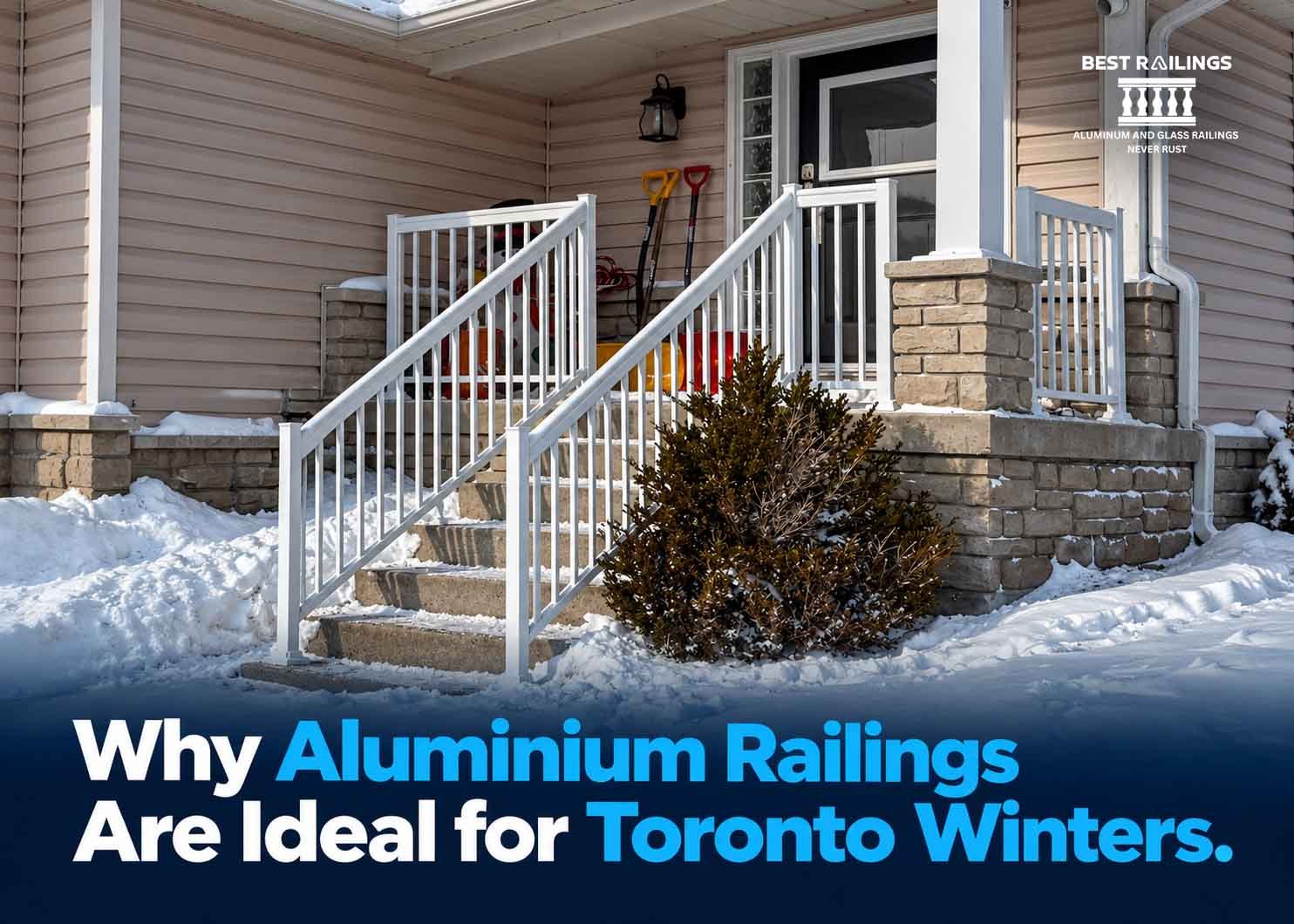
Aluminium railings for winter are ideal because the metal doesn’t rust, doesn’t rot and doesn’t crack in the cold. Snow, ice and salt hit your railing harder than any other part of the home, and aluminium is built to take it.
The salt part is bigger than most people think. Environment and Climate Change Canada reports that about 5 million tonnes of road salt are used on Canadian roads each year. Much of it is tracked onto steps, porches and balcony doors across Toronto.
This guide explains how winter-resistant aluminium railings handle snow and salt, how they compare with wood and steel, what cold does to the metal, and how to prepare your railing before the first freeze. If you want durable aluminium railings Toronto homeowners can trust, start here.
Key Takeaways
- Aluminium doesn’t rust. A natural oxide layer plus powder coating protects it from moisture and salt.
- Cold doesn’t make aluminium brittle. It stays strong in freezing temperatures.
- Wood rots and steel rusts. Both need more upkeep in a Toronto winter.
- Aluminium expands and contracts with temperature, so installation quality matters.
- Rinse off de-icers in spring and touch up any chips.
- Best Railings builds custom aluminium systems with up to a 20-year guarantee.
Table of Contents
- Why Are Aluminium Railings for Winter a Smart Choice in Toronto?
- How Do Winter-Resistant Aluminium Railings Handle Snow, Ice and Salt?
- How Does Aluminium Compare With Wood and Steel in Winter?
- What Does Cold Do to Aluminium Railings?
- How Do You Prepare Your Railing for Winter?
- What Should You Look for in Durable Aluminium Railings in Toronto?
- FAQs
Why Are Aluminium Railings for Winter a Smart Choice in Toronto?
They are a smart choice because they resist the three things that wear railings down: moisture, salt and temperature swings. Aluminium handles all three without rusting, rotting or needing a fresh coat of paint every few years.
Toronto winters aren’t just cold. They bounce between freezing and thawing. Rain falls on frozen steps, slush melts and refreezes overnight, and salt sits on every surface. That cycle destroys materials that absorb water or corrode.
Here is what makes aluminium different:
- A natural oxide layer protects the metal underneath.
- Powder coating adds a tough, sealed finish on top.
- No wood fibres means nothing swells, splits or rots.
- Light weight puts less stress on older porches and balconies.
Fact: aluminium doesn’t rust because rust is iron oxide. Opinion: for exterior railings in Ontario, it is the lowest-hassle material we install.
How Do Winter-Resistant Aluminium Railings Handle Snow, Ice and Salt?
They shed snow and ice easily and resist salt damage because the coating keeps moisture away from the metal. A quick rinse after winter removes any residue.
Snow: Snow piles against posts and rails. A properly anchored aluminium system handles that weight. Use a plastic shovel near the base to avoid scratching the finish.
Ice: Ice forms on handrails and sits in gaps. Aluminium doesn’t absorb water, so there’s nothing for the ice to expand into from inside the material.
Salt: Road salt and de-icers don’t rust aluminium. They can leave a white residue and dull the coating if left for months. Rinse the base of each post once the snow clears.
Think of a typical front porch. By February, the bottom of every post has a layer of salt and grit. On iron, that layer eats into the paint. On aluminium, it washes off with a hose and mild soap.
Our outdoor railing systems are designed with exactly these conditions in mind.
How Does Aluminium Compare With Wood and Steel in Winter?
Aluminium needs the least winter care of the three. Wood absorbs water and rots, and steel rusts when its coating is damaged.
| Winter Problem | Wood | Steel or Iron | Aluminium |
| Moisture and rot | Absorbs water, can rot | Doesn’t rot | Doesn’t rot |
| Rust from salt | No rust, but salt degrades finish | Rusts if coating breaks | Doesn’t rust |
| Freeze-thaw cracking | Can split and warp | Joints can corrode | Stable |
| Upkeep | Stain or paint regularly | Repaint, treat rust | Rinse and wash |
| Weight | Medium | Heavy | Light |
Recommendation: if your current railing is wood or iron and you are tired of repainting every spring, aluminium is the practical upgrade. For a clear view, you can also pair aluminium frames with glass railing panels.
What Does Cold Do to Aluminium Railings?
Cold doesn’t weaken aluminium, but temperature swings make it expand and contract. A good installer plans for that movement so joints stay tight.
Here is what to know:
- Strength stays steady. Aluminium doesn’t become brittle in freezing temperatures.
- Expansion is normal. Aluminium moves slightly more than steel with temperature changes. Quality systems use joints and fasteners designed for it.
- Frost can move the structure. Decks, porches and steps shift slightly as the ground freezes and thaws. That can loosen fasteners over time.
- Metal feels cold. Aluminium conducts heat, so a handrail feels cold to bare hands. Some homeowners add a grippable handrail profile for comfort.
The City of Toronto has noted that the frost line in an average winter reaches about one metre underground. That ground movement can affect structures a railing is attached to, which is why spring checks matter.
How Do You Prepare Your Railing for Winter?
Check the finish, tighten fittings and clear debris in fall. Then rinse and inspect in spring. Both visits take under an hour.
Before winter:
- Wash the railing with mild soap and water to remove dirt.
- Check the coating. Touch up chips with matching paint.
- Tighten loose fittings by hand where possible.
- Clear leaves from base plates so water can drain.
After winter:
- Rinse off salt and de-icer residue.
- Wipe the base of each post with a soft cloth.
- Check for movement. If a post feels loose, book a service visit.
- Look for coating damage and repair it early.
A loose railing is a safety risk, so don’t leave it until next season.
What Should You Look for in Durable Aluminium Railings in Toronto?
Look for a thick powder coat, solid anchoring, a custom fit and a clear guarantee. Those four things decide how well your railing holds up over the years.
- Quality powder coating. Even coverage, especially at edges and corners.
- Proper anchoring. Matched to your surface, whether concrete, stone or wood.
- Custom fabrication. Gaps let water in and make joints work harder.
- Weather-rated hardware. Fasteners should be suited for outdoor use.
- A written guarantee. Know what’s covered and for how long.
- Credentials. Licensed, insured and WSIB certified.
Best Railings designs and installs weather-resistant aluminium railings across Toronto, Mississauga, Brampton and the GTA. The team has completed 400+ projects, sources materials locally and backs its work with up to a 20-year guarantee. You can see the full aluminium railing range online.
Want Railings That Shrug Off Winter?
Talk to Best Railings about aluminium railings for winter that stay strong and look good through every freeze. We’ll measure, design and install them, then stay available after the job.
Call +1 (647) 996-9595 or request your free estimate online.
FAQs
Do aluminium railings crack in cold weather?
No. Aluminium stays strong in freezing temperatures. It doesn’t become brittle the way some materials do. Issues usually come from poor installation or a damaged coating, not from the cold itself.
Can road salt damage aluminium railings?
Salt doesn’t rust aluminium, but it can dull the finish and leave residue. Rinse the railing in spring and touch up any chips to protect the coating.
Are aluminium railings better than wood in winter?
For most homeowners, yes. Wood absorbs moisture and can rot, warp or split over time. Aluminium needs only washing and an occasional touch-up.
Do aluminium railings get icy?
Ice can form on any outdoor surface. Aluminium doesn’t absorb water, so ice sits on top and clears easily. Treat steps and landings, and clear handrails when you can.
Should I remove snow from my railing?
You don’t have to, but clearing heavy snow around the base helps. Use a plastic shovel and avoid metal tools that can scratch the finish.
Build for the Winter You Actually Get
Toronto winters are long and hard on exterior materials. A railing that resists rust, rot and salt saves you time every spring and money over the years. That is why durable aluminium railings Toronto homeowners choose keep showing up on porches, decks and balconies.
Start with a free estimate from Best Railings. Call +1 (647) 996-9595 or send your project details, and get railings made for winter.