
Walk into most newer office lobbies, condo amenity floors, or retail spaces in Toronto, and you’ll notice the railings before you notice much else. Not because they’re flashy, but because they’re barely there. Clean glass panels instead of bulky posts and pickets, keeping the whole space feeling open.
That’s not an accident. Commercial glass railings have become the default for a reason, and it’s not just about looking modern.
TL;DR: Glass railings suit commercial properties in Toronto because they create an open, professional appearance without blocking sightlines or natural light. They meet the same safety and building code requirements as traditional railings, hold up well in high-traffic settings, and require less maintenance than most property managers expect.
What Commercial Glass Railings Actually Are
Commercial glass railing systems use tempered safety glass panels, either frameless or set into a metal channel or post system, to create a barrier that meets code without visually closing off a space. Aluminum framing is often paired with the glass for structural support, giving the strength of a traditional railing with a fraction of the visual bulk.
These systems show up in office stairwells, mezzanine levels, retail entryways, hotel lobbies, and condo common areas across Toronto, anywhere a business wants a barrier that doesn’t interrupt the flow or look of the space.
Why More Toronto Businesses Are Making the Switch
Commercial spaces sell an impression the moment someone walks in. A bulky iron railing or heavy wood banister can make even a well-designed lobby feel dated or closed in. Glass does the opposite. It lets sightlines carry through the space, keeps natural light moving between floors, and reads as clean and current.
There’s a practical side too. Property managers dealing with high foot traffic want something that holds up structurally without needing constant upkeep, and glass railing systems, paired with aluminum framing, deliver both.
Where Glass Railings Work Best in Commercial Settings
Glass railings suit a range of commercial applications, though a few stand out:
- Office lobbies and stairwells, where an open, professional first impression matters
- Retail entryways, where visibility and product sightlines are part of the design
- Hotel and hospitality spaces, where a polished look reflects on the guest experience
- Condo amenity floors and rooftop terraces, where views are part of the appeal
- Mezzanine levels, where glass keeps the lower floor visible instead of blocked off
In each case, the goal is the same: a barrier that meets safety requirements without functioning like a wall.
Safety and Code Compliance
Commercial glass railings are built with tempered safety glass, designed to meet the same load and impact requirements as any other guard system under Ontario building code. If the glass does break, tempered safety glass fractures into small, blunt pieces rather than sharp shards, which is part of why it’s approved for this kind of application.
Panel thickness, mounting method, and rail height all factor into code compliance, and these details matter more in commercial settings than residential ones, given higher foot traffic and stricter inspection standards for public and semi-public spaces. A properly engineered system accounts for all of this from the design stage, not as an afterthought.
Maintenance in a High-Traffic Commercial Setting
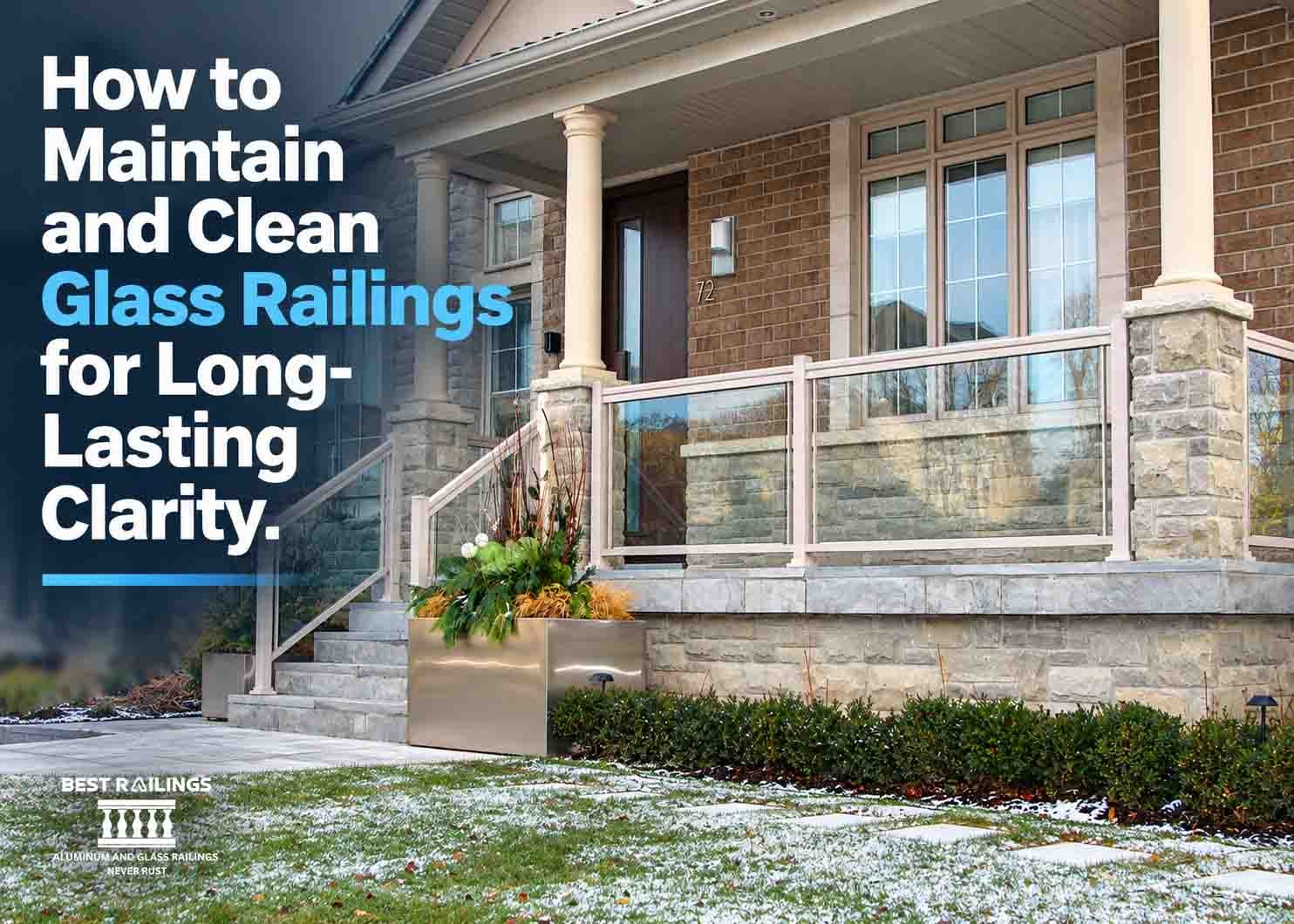
A common concern with commercial glass railing systems is fingerprints and smudging in high-traffic areas. In practice, it’s manageable. A standard glass cleaner and a regular cleaning schedule, something most commercial buildings already have in place for other surfaces, keeps panels looking clear.
The aluminum framing paired with the glass needs even less attention. It doesn’t rust and holds its finish for years, so the metal components of the system aren’t adding to the maintenance load the way iron or steel framing would.
Cost Considerations for Commercial Projects
Commercial glass railing costs depend on scope: total linear footage, whether the system is frameless or framed, glass thickness, and site complexity all factor in. Frameless systems generally cost more than framed ones because of the additional structural engineering required to support the glass without visible posts.
For larger commercial projects, cost per linear foot typically drops compared to smaller residential installs, since fabrication and installation scale more efficiently across a bigger job. We provide detailed, project-specific quotes for glass railing installations rather than flat estimates, since commercial scope varies so much project to project.
FAQ
Are glass railings strong enough for high-traffic commercial buildings?
Yes. Commercial glass railings use tempered safety glass engineered to meet the same structural load requirements as traditional railing systems, and they’re built specifically to handle higher foot traffic in office, retail, and hospitality settings.
How much do commercial glass railings cost in Toronto?
Cost varies by total footage, glass thickness, and whether the system is frameless or framed. Frameless systems generally run higher due to added structural requirements. A site assessment gives the most accurate quote for a specific project.
Do commercial glass railings meet Ontario building code?
Yes. Panel thickness, mounting, and rail height are all designed to meet code requirements for commercial applications, which are typically stricter than residential standards due to higher public foot traffic.
How hard is it to keep glass railings clean in a busy commercial space?
It’s more manageable than most property managers expect. Regular cleaning with standard glass cleaner keeps panels clear, and most commercial buildings can fold this into existing janitorial routines.
What’s the difference between frameless and framed glass railings?
Frameless systems use structural glass with minimal or no visible metal framing, giving the most open look but requiring more engineering. Framed systems use aluminum posts or channels to support the glass, generally at a lower cost.
Conclusion
If you’re planning a commercial renovation or new build in Toronto, glass railings are worth putting on the list early, since they factor into both design and code planning. Contact us for a project quote and see what a glass railing system would look like in your space.